
Inflammation is an essential physiological defense mechanism. However, too much, for too long in the wrong place can be deadly. This dichotomy exists partially because of the dual role of inflammation in both repair and injury.
Strokes trigger an inflammatory response and can greatly reduce the chance of recovery or even survival.1 2
Every year, 800,000 people in the United States experience a stroke, mostly these patients end up in Intensive Care Units (ICU). The costs are over $125 billion in the US and Europe combined.3 4
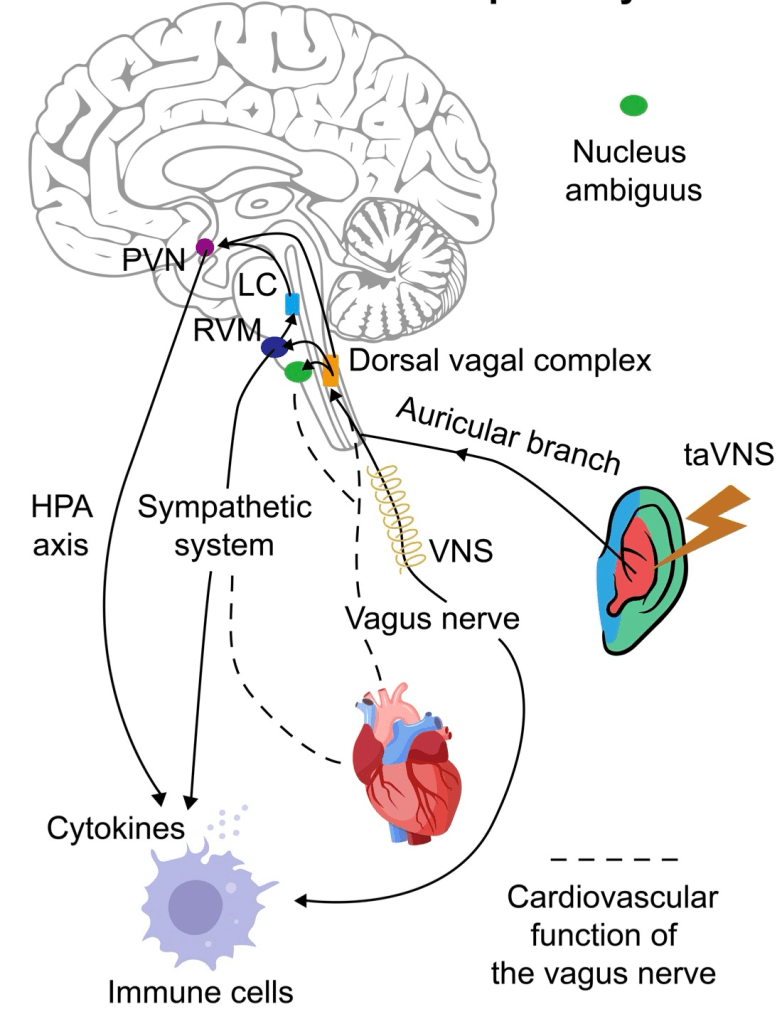
Inflammation is when your body’s immune system activates a bunch of cells and proteins to get rid of things that could be a threat to your health, such as damaged cellular debris or bacteria. If you get a cut, inflammation will help heal and remove damaged areas. If a person has a stroke, the injured part of the brain tissue causes local inflammation to remove and heal the damaged area but it also triggers systemic inflammation throughout the full body. This systemic inflammation poses a major risk factor in other systems of the body and can kill you within days.
In the case of a cut, we might just take an ibuprofen but a stroke is more complicated. Anti-inflammatory drugs can cause further bleeding. We need a way to reduce the systemic inflammation during the crucial recovery hours and days after a stroke.

Led by neurosurgeon, inventor, entrepreneur, and former colleague of Pablos at the Intellectual Ventures Lab, Dr. Eric Leuthardt, Aurenar has found a way to reduce systemic inflammation in a non-invasive, non-pharmacological, and painless process. This team has developed a wearable Vagus Nerve stimulation device that can drive the Vagal Nerve to reduce systemic inflammation.
Essentially, anti-inflammatory AirPods.
The Vagus Nerve is one of the 12 Cranial Nerves stemming from our brains and it is the longest nerve in the body, innervating many organs.
The nerve’s auricular branch extends through the external ear making it accessible to an earbud style device. Other companies are already deploying similar devices for headaches, depression, and other ailments, but Aurenar is the only one aimed at reducing inflammation.
ICU nurses can easily set patients up with the inexpensive, easy-to-use earbuds for 20 minutes, twice a day, reducing cost substantially. Millions of patients every year.
Aurenar is focused on the substantial ICU market, but their device will lead to next generation wearables that go beyond just monitoring.
Deep Future is elated to be a part of this solution for the world as investors in Aurenar.
This episode of the Deep Future Podcast features Aurenar founder Eric Leuthardt:
References
- Luengo-Fernandez R, Violato M, Candio P, Leal J. Economic burden of stroke acrossEurope: A population-based cost analysis. Eur Stroke J. 2019 Oct;239698731988316. ↩︎
- Girotra T, Lekoubou A, Bishu KG, Ovbiagele B. A contemporary and comprehensive analysis of the costs of stroke in the United States. J Neurol Sci.2020 Mar;410:116643. ↩︎
- Burden of Stroke in EuropeThirty-Year Projections of Incidence, Prevalence, Deaths, and Disability-Adjusted Life YearsStroke. 2020;51:2418–2427. DOI: 10.1161/STROKEAHA.120.029606 ↩︎
- State of the science in inflammation and stroke recovery: a systematic reviewAnn Phys Rehabil Med. 2022 March ; 65(2): 101546. doi:10.1016/j.rehab.2021.101546. ↩︎
- The effect of transcutaneous auricular vagus nerve stimulation on cardiovascular function in subarachnoid hemorrhage patients: a safety study https://doi.org/10.1101/2024.04.03.24304759 (awaiting peer review) ↩︎